

Thymosin Alpha-1, a powerful substance first identified in 1972 and sourced from the thymus
gland, serves as a natural regulator for our immune system. Over the years, scientists have
been delving into its potential role in treating a range of health conditions. These include cystic
fibrosis, tuberculosis, infections caused by cytomegalovirus, respiratory issues, chronic
hepatitis, and even cancer. The remarkable ability of this compound to modulate our immune
response holds great promise for future therapeutic applications.
Description
What Is Thymosin Alpha 1?
Thymosin Alpha 1 is a peptide or small protein originally discovered in the thymus gland. It plays
a key role in the immune system, particularly in developing T cells, which are crucial for the
body’s defense against infections and diseases.
Thymosin Alpha 1 has been synthesized and used in various clinical settings due to its
immunomodulatory properties. It has been shown to increase the activity of T cells, stimulate
the production of antibodies, and enhance the function of natural killer cells. This makes it
potentially useful in treating conditions that involve a weakened immune system, such as certain
types of cancer, viral infections, and autoimmune diseases.
Thymosin Alpha-1 Structure
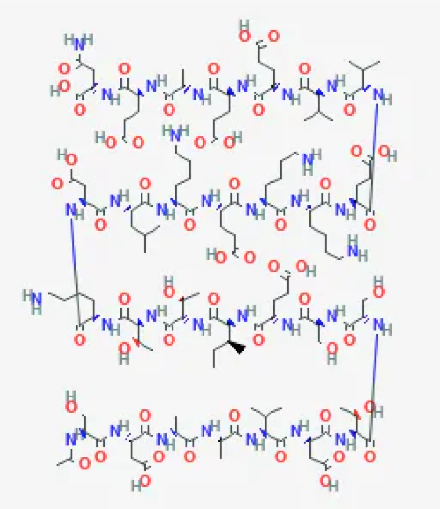
Source: PubChem
● Sequence:
Ser-Asp-Ala-Ala-Val-Asp-Thr-Ser-Ser-Glu-Ile-Thr-Thr-Lys-Asp-Leu-Lys-Glu-Lys-Lys-Glu-
Val-Val-Glu-Glu-Ala-Glu-Asn
● Molecular Formula: C129H215N33O55
● Molecular Weight: 3108.315 g/mol
● PubChem CID: 16130571
● CAS Number: 62304-98-7
● Synonyms: Thymalfasin
Thymosin Alpha-1 Research
Thymosin Alpha-1 Modulates the Immune System
Thymosin Alpha-1 is a potent peptide that plays a significant role in modulating the immune
system. This connection lies in the peptide’s ability to stimulate and regulate various aspects of
the immune response.
One of the primary ways Thymosin Alpha-1 achieves this is by enhancing the function of
certain immune cells, particularly T cells and dendritic cells. These cells are crucial for the
body’s defense against infections and diseases. T cells kill infected host cells and activate other
immune cells, while dendritic cells help the immune system recognize foreign invaders.
In addition, Thymosin Alpha-1 can interact with toll-like receptors, proteins that play a key role in
the innate immune system. Thymosin Alpha-1 can trigger immune responses by binding to
these receptors, helping the body effectively fight off pathogens.
Another important aspect of Thymosin Alpha-1’s immune-modulating action is its ability to
down-regulate inflammation. While inflammation is a necessary part of the immune response,
chronic inflammation can lead to various health problems. Thymosin Alpha-1 can help maintain
a balanced immune response by reducing and modulating inflammation.
Thymosin Alpha-1 Promotes Nerve Growth
Thymosin Alpha-1 has been found to promote nerve growth as well. This connection between
Thymosin Alpha-1 and nerve growth is thought to be due to its immunomodulatory effects.
Research indicates that neonatal immune activation with Thymosin Alpha-1 can encourage
neural development. The immune system is intricately involved in the growth, development, and
maintenance of the central nervous system. Thus, by enhancing the function of the immune
system, Thymosin Alpha-1 may indirectly support nerve growth.
In addition, studies have reported that the administration of Thymosin Alpha-1 can enhance the
Nerve Growth Factor (NGF) level and its distribution. NGF is a protein crucial for the growth,
maintenance, and survival of certain nerve cells.
Furthermore, research suggests that Thymosin Alpha-1 may accelerate wound healing by
promoting the formation of new blood vessels and cell migration at the injury site. Since nerve
repair and regeneration often occur alongside wound healing, this could contribute to its nerve
growth-promoting effects.