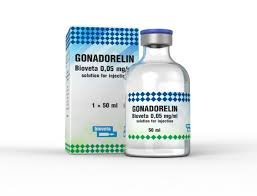
Gonadorelin, a hormone agonist known for its role in reproductive health, has shown
remarkable benefits in addressing infertility and hypogonadism. But the exciting news
doesn’t stop there! Recent research suggests that it might have the potential to halt the growth
of breast and prostate cancer, offering hope for patients battling these diseases. Additionally,
there are promising findings that indicate gonadorelin could be an effective treatment for
Alzheimer’s disease, opening up new possibilities in the fight against this challenging
condition
DISCLAIMER:
This PRODUCT IS INTENDED FOR RESEARCH PURPOSES ONLY. It is designed for in vitro
testing and laboratory experimentation exclusively. All the information provided on this website
is purely for educational purposes. Under the law, any form of bodily introduction of this product
into humans or animals is strictly prohibited. It is essential that only licensed and qualified
professionals handle this product. This product is not intended to be used as a drug, food, or
cosmetic. It must not be misbranded, misused, or mislabeled as such. Its purpose and usage
are solely confined to research and scientific investigation.
Description
What Is Gonadorelin?
Gonadorelin, also known as gonadotropin-releasing hormone (GnRH), is a hormone that
plays a vital role in the regulation of reproductive functions. It is produced by the
hypothalamus in the brain and acts on the pituitary gland to stimulate the release of
follicle-stimulating hormone (FSH) and luteinizing hormone (LH). These hormones are
essential for the development and maturation of the ovaries in females and the testes in males.
Gonadorelin is commonly used in medical settings to diagnose and treat various reproductive
disorders. It can be administered via injection or nasal spray. In fertility treatments,
gonadorelin can help stimulate ovulation in women who have irregular menstrual cycles or have
difficulty conceiving. In men, it can be used to enhance sperm production.
Gonadorelin Structure
Gonadorelin Structure
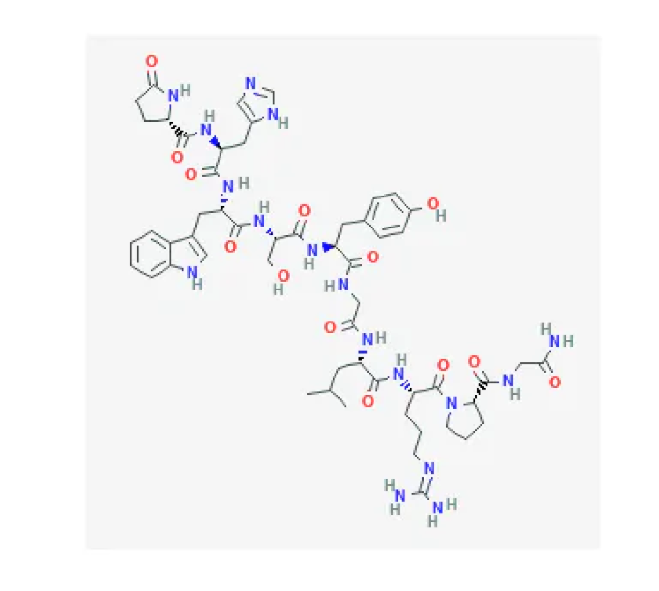
Source: PubChem
● Sequence: Pyr-His-Trp-Ser-Tyr-Gly-Leu-Arg-Pro-Gly
● Molecular Formula: C55H75N17O13
● Molecular Weight: 1182.311 g/mol
● PubChem CID: 638793
● CAS Number: 9034-40-6
● Synonyms: Growth Hormone Releasing Factor, Somatocrinin, Somatoliberin
Gonadorelin Effects
Gonadorelin Research and Breast Cancer Prevention
Gonadorelin research has shown potential in breast cancer prevention through various
mechanisms.
Raloxifene and antiestrogenic gonadorelin: A study published in Cancer Prevention
Research found that both raloxifene and gonadorelin inhibit intestinal tumorigenesis by
modulating immune cells and decreasing stem-like cells. This suggests a potential role for
gonadorelin in cancer prevention.
Gonadorelin and micrometastatic breast cancer: According to a study published on PMC,
gonadorelin can occupy the receptors for gonadorelin in the pituitary gland, potentially
preventing the recurrence of micrometastatic breast cancer.
Targeted drug delivery for breast cancer: Functionalized liposomes have been studied as a
delivery system for targeted breast cancer drug delivery. This approach shows promise in
improving treatment strategies for breast cancer.
Hormone agonists for breast cancer prevention: Hormone agonists, such as gonadorelin
and goserelin, have been explored as potential options for breast cancer prevention. Economic
studies have evaluated the cost-effectiveness of these prevention strategies.
Ovarian ablation with gonadorelin analog: An article published in Nature discusses the
proposal of temporary ovarian ablation using a gonadorelin analog as a preventive strategy for
breast cancer. This study aims to determine the effects of risk factors and prevention strategies
on breast cancer development.
Gonadorelin a Breakthrough in Prostate Cancer
New breakthroughs in the treatment of prostate cancer have emerged, including the use of
Gonadorelin. This hormone therapy has shown promising results in lowering testosterone
levels in certain patients with prostate cancer. By reducing testosterone levels, which is
necessary for cancer cell growth, Gonadorelin may help slow down or even stop the
progression of the disease.
According to a study published in the Journal of Urology, testosterone breakthrough rates
during androgen deprivation therapy (ADT) for castration-sensitive prostate cancer were
observed to be significantly reduced with the use of Gonadorelin. This indicates the potential
effectiveness of Gonadorelin in suppressing testosterone levels and managing the disease.
The FDA has also approved the first oral hormone therapy for advanced prostate cancer, which
further supports the potential benefits of hormone therapies like Gonadorelin in treating this
condition. These hormone therapies, including ADT, aim to halt testosterone production or
block its effects on prostate cancer cells.
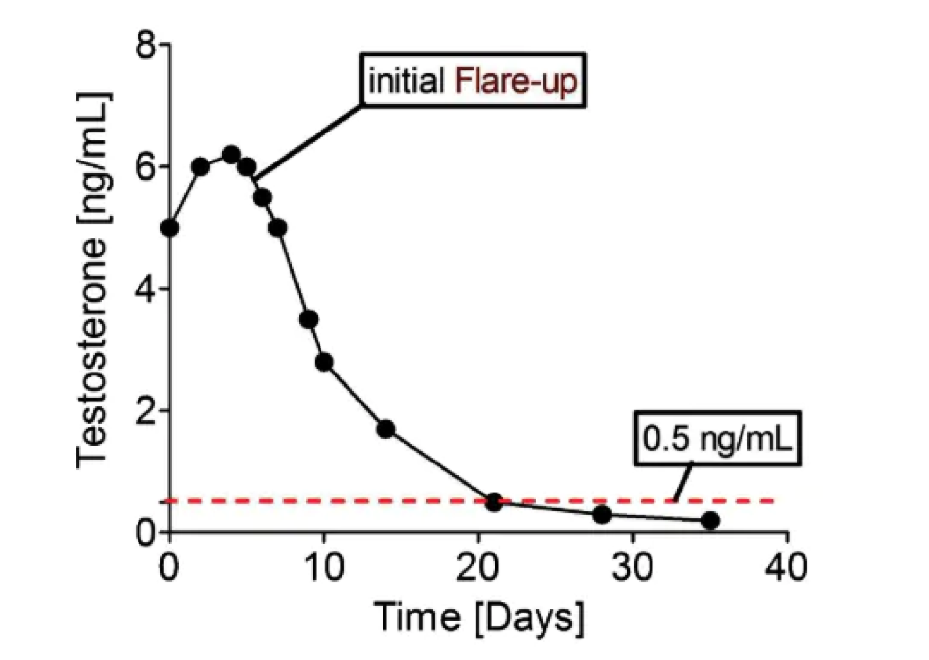
The impact of gonadorelin and GnRH analogues on testosterone levels
Source: PubMed
Gonadorelin May Reduce Dementia Risk
Recent studies have suggested that Gonadorelin, a gonadotropin-releasing hormone (GnRH)
agonist, may play a role in reducing the risk of dementia. Dementia is a progressive
neurological disorder characterized by a decline in cognitive function, memory loss, and
impaired daily functioning. It affects millions of people worldwide, with Alzheimer’s disease
being the most common form.
One study published in the National Center for Biotechnology Information (NCBI) found a
potential link between the use of GnRH agonists and a reduced risk of dementia or Alzheimer’s
disease. The study compared different types of androgen deprivation therapy and their
association with dementia risk. Interestingly, the use of antiandrogen monotherapy was
associated with an increased risk of dementia or Alzheimer’s disease. In contrast, GnRH agonist
use and orchiectomy (surgical removal of the testicles) were not linked to an elevated risk.
Another review published in PMC explored alternative treatment options for Alzheimer’s
disease, including targeting the release of luteinizing hormone (LH), which GnRH regulates. The
review suggested that targeting LH release through the use of GnRH agonists could be a
successful strategy in preventing or delaying the progression of Alzheimer’s disease.
Furthermore, hormone replacement therapy (HRT) has also been implicated in reducing the risk
of dementia. A study mentioned by CNN found that taking hormone replacement therapy at the
right time in midlife can reduce the risk of dementia and Alzheimer’s disease by 23% to
32%.
While some studies suggest a potential protective effect of hormonal therapies like Gonadorelin
and HRT on dementia risk, it is important to note that research findings on this topic have been
inconclusive and contradictory at times. More research is needed to fully understand the
relationship between these therapies and dementia risk.
Gonadorelin Research
Gonadorelin has long been used in the treatment of human and animal diseases, but ongoing
research continues to unveil fascinating insights into the functioning of GnRH and GnRH
analogues in both normal physiology and disease development. One particularly
groundbreaking discovery has been the potential of gonadorelin in the treatment of prostate
cancer, leading to the development of an exceptionally effective cure. Thanks to early detection,
doctors have achieved a remarkable 99% cure rate for patients with prostate cancer.
Similar breakthroughs may be on the horizon as researchers delve into the significant role of
gonadorelin and its downstream hormones in the pathways associated with the risk of
Alzheimer’s disease.
It’s important to highlight that gonadorelin demonstrates minimal side effects and exhibits
excellent subcutaneous bioavailability in mice, making it a promising candidate for further
exploration. However, it’s essential to note that dosages per kilogram in mice do not directly
translate to humans. Additionally, it’s crucial to mention that gonadorelin, available for
purchase at Peptide Shop, is strictly limited to educational and scientific research purposes, and
it is not intended for human consumption. Therefore, only licensed researchers should consider
acquiring gonadorelin for their research endeavors.
Please note that all the articles and product information provided on this website are intended
for informational and educational purposes only.
The products offered on this platform are specifically designed for in-vitro studies, meaning they
are conducted outside the body. It is important to clarify that these products are not medicines or
drugs, and the FDA has not approved them for the prevention, treatment, or cure of any medical
condition, ailment, or disease.
Article Author
The above literature was researched, edited and organized by Dr. Logan, M.D. Dr. Logan holds
a doctorate degree from Case Western Reserve University School of Medicine and a B.S. in
molecular biology.
Scientific Journal Author
Dr. Giorgio Secreto currently studies at the IRCCS National Cancer Institute in Italy. His
accolades include, a 1963 High School degree, Maturità Classica 1969 Degree in Medicine and
Surgery, University of Milan, Italy 1974 Degree Specialist in Endocrinology, University of Turin,
Italy. Doctor Secreto has been working at the National Cancer Institute of Milan since 1970 up to
now, after his retirement in December 2010. The role of androgens in breast cancer is his main
field of study.
He has been teacher at the Italian School of Senology (1989-1996), Associate Professor in
Oncology, L.U.de.S. University, Lugano, Switzerland (1999-2008), and Associate Professor in
Endocrinology, Nurses’ School, University of Milan (2003-2008). He is active member of the
New York Academy of Sciences and the American Association for the Advancement of
Sciences. He published about 100 papers, including a few that pertain to GnRH’s effects on the
reduction of breast cancer via minimizing excessive androgens.
Dr. Giorgio Secreto is being referenced as one of the leading scientists involved in the research
and development of Gonadorelin. In no way is this doctor/scientist endorsing or advocating the
purchase, sale, or use of this product for any reason. There is no affiliation or relationship,
implied or otherwise, between Peptide Shop and this doctor. The purpose of citing the doctor is
to acknowledge, recognize, and credit the exhaustive research and development efforts
conducted by the scientists studying this peptide. Doctor Secreto is listed in [1] and [3] under the
referenced citations.
Referenced Citations
- G. Secreto et al., “A novel approach to breast cancer prevention: reducing excessive
ovarian androgen production in elderly women,” Breast Cancer Res. Treat., vol. 158, no.
3, pp. 553–561, 2016. - D. V. Spicer and M. C. Pike, “Sex steroids and breast cancer prevention,” J. Natl. Cancer
Inst. Monogr., no. 16, pp. 139–147, 1994. - G. Secreto, P. Muti, M. Sant, E. Meneghini, and V. Krogh, “Medical ovariectomy in
menopausal breast cancer patients with high testosterone levels: a further step toward
tailored therapy,” Endocr. Relat. Cancer, vol. 24, no. 11, pp. C21–C29, 2017. - E. S. Vollaard, A. P. van Beek, F. A. J. Verburg, A. Roos, and J. A. Land,
“Gonadotropin-releasing hormone agonist treatment in postmenopausal women with
hyperandrogenism of ovarian origin,” J. Clin. Endocrinol. Metab., vol. 96, no. 5, pp.
1197–1201, May 2011. - F. Labrie, “Hormonal therapy of prostate cancer,” Prog. Brain Res., vol. 182, pp.
321–341, 2010. - F. Labrie, “GnRH agonists and the rapidly increasing use of combined androgen
blockade in prostate cancer,” Endocr. Relat. Cancer, vol. 21, no. 4, pp. R301-317, Aug.
2014. - F. Labrie, “Combined blockade of testicular and locally made androgens in prostate
cancer: a highly significant medical progress based upon intracrinology,” J. Steroid
Biochem. Mol. Biol., vol. 145, pp. 144–156, Jan. 2015. - F. Labrie, “[Keyrole of endocrinology in the victory against prostate cancer],” Bull. Cancer
(Paris), vol. 93, no. 9, pp. 949–958, Sep. 2006. - V. Burnham, C. Sundby, A. Laman-Maharg, and J. Thornton, “Luteinizing hormone acts
at the hippocampus to dampen spatial memory,” Horm. Behav., vol. 89, pp. 55–63, 2017. - C. V. Rao, “Involvement of Luteinizing Hormone in Alzheimer Disease Development in
Elderly Women,” Reprod. Sci. Thousand Oaks Calif, vol. 24, no. 3, pp. 355–368, 2017. - J. Lin et al., “Genetic ablation of luteinizing hormone receptor improves the amyloid
pathology in a mouse model of Alzheimer disease,” J. Neuropathol. Exp. Neurol., vol. 69,
no. 3, pp. 253–261, Mar. 2010. - R. L. Bowen, T. Butler, and C. S. Atwood, “Not All Androgen Deprivation Therapies Are
Created Equal: Leuprolide and the Decreased Risk of Developing Alzheimer’s Disease,”
J. Clin. Oncol., vol. 34, no. 23, p. 2800, Aug. 2016. - M. A. Smith, R. L. Bowen, R. Q. Nguyen, G. Perry, C. S. Atwood, and A. A. Rimm,
“Putative Gonadotropin-Releasing Hormone Agonist Therapy and Dementia: An
Application of Medicare Hospitalization Claims Data,” J. Alzheimers Dis. JAD, vol. 63,
no. 4, pp. 1269–1277, 2018. - A. Cáceres, J. E. Vargas, and J. R. González, “APOE and MS4A6A interact with GnRH
signaling in Alzheimer’s disease: Enrichment of epistatic effects,” Alzheimers Dement. J.
Alzheimers Assoc., vol. 13, no. 4, pp. 493–497, Apr. 2017.
ALL ARTICLES AND PRODUCT INFORMATION PROVIDED ON THIS WEBSITE ARE FOR
INFORMATIONAL AND EDUCATIONAL PURPOSES ONLY.
The products offered on this website are furnished for in-vitro studies only. In-vitro studies (Latin:
in glass) are performed outside of the body. These products are not medicines or drugs and
have not been approved by the FDA to prevent, treat or cure any medical condition, ailment or
disease. Bodily introduction of any kind into humans or animals is strictly forbidden by law.