
What Is Epithalon?
Epithalon, also known as Epitalon or Epithalone, is a synthetic peptide with the amino acid
sequence Ala-Glu-Asp-Gly. It is a naturally occurring substance found in the pineal gland of the
human body. Epithalon is known for its potential anti-aging properties and has gained interest in
longevity and life extension.
Research suggests that Epithalon may have several beneficial effects on the body. It has been
found to stimulate the production of telomerase, an enzyme that helps maintain and repair
telomeres. Telomeres are protective caps at the ends of chromosomes that shorten with age
and are associated with cellular aging and overall health.
Epithalon has also been found to regulate the production of melatonin, a hormone that regulates
sleep-wake cycles and has antioxidant properties. Additionally, it has been shown to have
immune-enhancing effects, potentially improving the function of the immune system.
Epithalon Structure
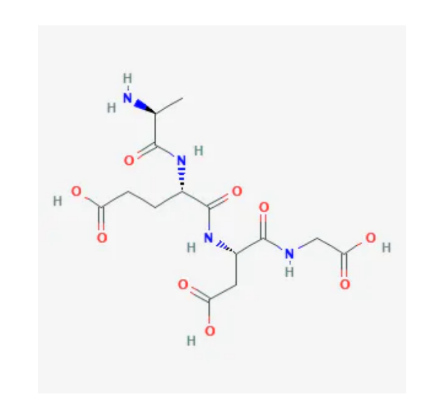
Source: PubChem
● Sequence: Ala-Glu-Asp-Gly
● Molecular Formula: C14H22N4O9
● Molecular Weight: 390.349 g/mol
● PubChem CID: 219042
● CAS Number: 307297-39-8
Epithalon Research
1.The Role of Telomerase in the Anti-Aging Effects of Epithalon
Telomeres are protective caps located at the ends of chromosomes that prevent them from
affecting the neighboring chromosomes. As cells divide, telomeres gradually shorten, eventually
leading to cell senescence or death. Telomerase is an enzyme that counteracts this process by
elongating telomeres and promoting cell longevity.
Research suggests that Epithalon may activate telomerase, increasing telomere length and
delaying cellular aging. Studies have demonstrated that Epithalon administration can enhance
the expression and activity of telomerase in various cell types, including human fetal fibroblasts.
Epithalon may help maintain telomere length and delay the onset of cellular senescence by
stimulating telomerase production. This could potentially contribute to the anti-aging effects
attributed to Epithalon.
2.Epithalon and DNA Activation
Several studies have indicated that Epithalon can protect against DNA damage and apoptosis in
aging oocyte eggs produced by females. Aging can increase oxidative stress and DNA damage,
but Epithalon alleviates these negative effects.
One of the mechanisms through which Epithalon works is activating telomerase, an enzyme that
helps prevent the degradation of telomeres. Telomeres are protective caps at the ends of
chromosomes that are crucial in maintaining DNA stability. By activating telomerase, Epithalon
aids in preserving telomere length, which is associated with cellular longevity and overall health.
Furthermore, Epithalon has shown potential in enhancing sleep and protecting DNA and
telomeres. It has been observed to modify chromatin, responsible for forming chromosomes,
thereby supporting DNA integrity.
3.Epithalon and Skin Health
By activating skin fibroblasts, Epithalon may help counteract the natural effects of aging on the
skin, such as the formation of wrinkles and fine lines. Additionally, Epithalon has been shown to
stimulate collagen formation, further aiding skin firmness and reducing the appearance of signs
of aging.
Another potential benefit of Epithalon for skin health is its antioxidative properties. As an
antioxidant, Epithalon may help protect the skin from oxidative stress caused by free radicals,
which can contribute to premature aging and skin damage.
4.Epithalon and Tumor Growth
Epithalon has shown promising inhibitory effects on tumor growth in various studies. It has been
observed to inhibit the development and expression of tumors, particularly in breast cancer and
leukemia.
One study conducted on transgenic mice characterized by accelerated aging found that
Epithalon inhibited tumor growth and expression of the HER-2/neu oncogene in breast tumors.
The maximum size of breast adenocarcinomas was significantly lower in the Epithalon-treated
group compared to the control group.
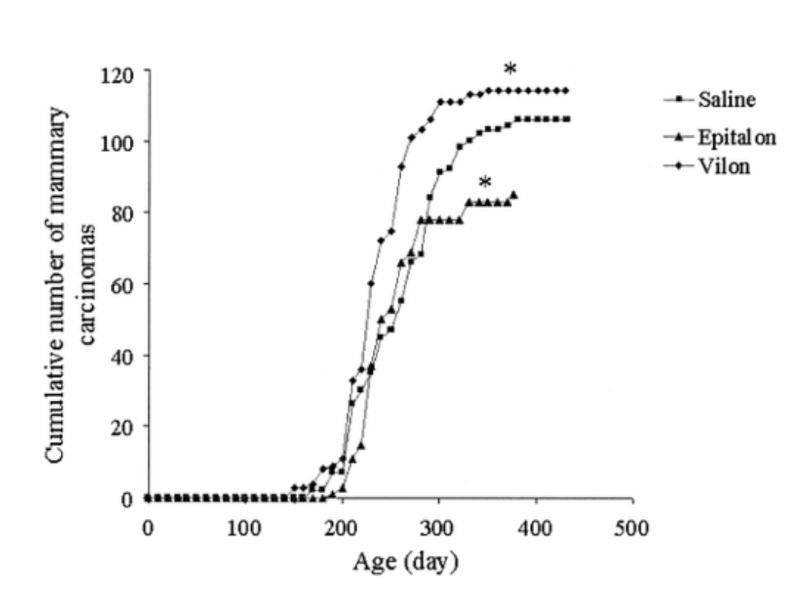
Slowed tumor growth in mice exposed to epithalon compared to controls
Source: Wiley Online Library
Another study indicated that treatment with Epitalon did not affect total spontaneous tumor
incidence but significantly inhibited the development of leukemia. Additionally, Epitalon
treatment reduced the cumulative number and maximum size of tumors in mice.
Long-term treatment with Epithalon has also been shown to increase the lifetime and inhibit the
growth of spontaneous neoplasms in mice.
These findings suggest that Epithalon may have potential as an inhibitory agent against tumor
growth.
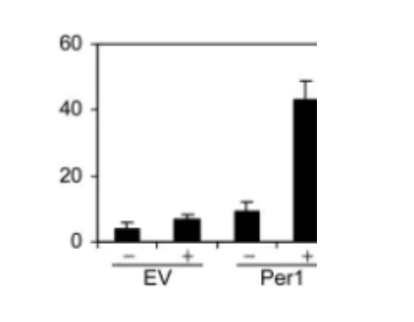
PER1 Causes Increased Rates of Ionizing Radiation-Induced Cell Death
Source: Molecular Cell
5.Epithalon and Melatonin Secretion
Epithalon has been found to impact melatonin secretion, a hormone produced by the pineal
gland that regulates sleep-wake cycles and plays a role in various physiological processes.
Here are some key findings related to Epithalon’s influence on melatonin secretion:
Protective effect of melatonin and epithalon on gonadotropin-releasing hormone:
Research suggests that the pineal gland, where melatonin is produced, plays an important role
in the formation of circadian signals needed for the secretion of gonadotropin-releasing
hormone (GnRH) that regulates reproductive functions. Melatonin and Epithalon have been
found to have a protective effect on this process.
Correction of hypothalamic regulation: Catecholamines, a class of neurotransmitters,
regulate GnRH synthesis and secretion. Melatonin and pineal gland peptides, including
Epithalon, can correct the hypothalamic regulation of catecholamine-mediated processes.
Impact on sleep patterns: Epithalon has been reported to impact melatonin synthesis, leading
to enhancements in sleep patterns.
Evaluation of Epithalon on melatonin and cortisol secretion: A study evaluated the effect of
Epithalon on melatonin and cortisol secretion in female rhesus monkeys. The results indicated
that Epithalon stimulation affects the secretion of these hormones.
Impact on basal night melatonin levels: The administration of Epithalon to old monkeys was
found to cause an increase in basal night melatonin levels. This suggests that Epithalon may
potentially restore age-related disturbances in melatonin production.
6.Epithalon and Eyesight
Improvement in Retinal Degeneration: A study investigated the effect of Epitalon on
congenital pigmented retina degeneration. It found that Epitalon improved the course of retinal
degeneration.
Potential Age-Related Eye Health Benefits: Epitalon has been suggested to function as an
antioxidant and may help combat age-related decline in eye function and other eye disorders.
Boosting Antioxidant Capacity: In a rat study, epithalamin (a related compound to Epitalon)
increased overall antioxidant capacity by 36%. This could have potential implications for
improving eye health.
Positive Clinical Effect on Retinal Lesions: Epitalon therapy has been reported to have a
positive clinical effect in 90% of cases in patients with degenerative retinal lesions.
Please note that all the articles and product information provided on this website are intended
for informational and educational purposes only.
The products offered on this platform are specifically designed for in-vitro studies, meaning they
are conducted outside the body. It is important to clarify that these products are not medicines or
drugs, and the FDA has not approved them for the prevention, treatment, or cure of any medical
condition, ailment, or disease.
Article Author
The above literature was researched, edited and organized by Dr. Logan, M.D. Dr. Logan holds
a doctorate degree from Case Western Reserve University School of Medicine and a B.S. in
molecular biology.
Scientific Journal Article

Vladimir Khavinson is a Professor, President of the European region of the
International Association of Gerontology and Geriatrics; Member of the Russian and Ukrainian
Academies of Medical Sciences; Main gerontologist of the Health Committee of the Government
of Saint Petersburg, Russia; Director of the Saint Petersburg Institute of Bioregulation and
Gerontology; Vice-president of Gerontological Society of the Russian Academy of Sciences;
Head of the Chair of Gerontology and Geriatrics of the North-Western State Medical University,
St-Petersburg; Colonel of medical service (USSR, Russia), retired.
Vladimir Khavinson is renowned for his groundbreaking work in discovering, conducting
experimental and clinical studies on novel classes of peptide bioregulators, and pioneering the
development of bioregulating peptide therapy. His research focuses on understanding the role of
peptides in regulating the mechanisms of aging, and he is particularly involved in the design,
pre-clinical, and clinical studies of new peptide geroprotectors.
Over the course of a 40-year-long investigation, Vladimir Khavinson has developed numerous
methods of applying peptide bioregulators to slow down the aging process and extend human
lifespan. His contributions have led to the introduction of six peptide-based pharmaceuticals and
64 peptide food supplements into clinical practice. Notably, he holds an impressive track record
with 196 patents (both Russian and international) and has authored 775 scientific publications.
Two significant books by Vladimir Khavinson, titled “Peptides and Ageing” (NEL, 2002) and
“Gerontological aspects of genome peptide regulation” (Karger AG, 2005), present his major
achievements and findings in the field.
Furthermore, Vladimir Khavinson played a pivotal role in establishing the scientific specialty
“Gerontology and Geriatrics” at the governmental level in the Russian Federation. Under his
guidance, an Academic Council has overseen more than 200 Ph.D. and Doctorate theses from
various countries.
It is important to clarify that while Prof. Vladimir Khavinson is referenced as one of the leading
scientists in the research and development of Epitalon, he is not endorsing or advocating the
purchase, sale, or use of this product for any purpose. There is no affiliation or relationship
between Peptide Shop and this esteemed doctor. The citation of his work serves solely to
acknowledge, recognize, and credit the extensive research efforts conducted by scientists
investigating this peptide. References to Prof. Vladimir Khavinson can be found in [1] [2] [5] [6]
[7] [9] [12] [13] [15] and [17] under the referenced citations.
Referenced Citations
- V. N. Anisimov, S. V. Mylnikov, and V. K. Khavinson, “Pineal peptide preparation
epithalamin increases the lifespan of fruit flies, mice and rats,” Mech. Ageing Dev., vol.
103, no. 2, pp. 123–132, Jun. 1998. [PubMed] - V. K. Khavinson, I. E. Bondarev, and A. A. Butyugov, “Epithalon peptide induces
telomerase activity and telomere elongation in human somatic cells,” Bull. Exp. Biol.
Med., vol. 135, no. 6, pp. 590–592, Jun. 2003. [PubMed] - T. A. Dzhokhadze, T. Z. Buadze, M. N. Gaiozishvili, M. A. Rogava, and T. A. Lazhava,
“[Functional regulation of genome with peptide bioregulators by hypertrophic
cardiomyopathy (by patients and relatives)],” Georgian Med. News, no. 225, pp. 94–97,
Dec. 2013. [PubMed] - V. N. Anisimov et al., “Effect of Epitalon on biomarkers of aging, life span and
spontaneous tumor incidence in female Swiss-derived SHR mice,” Biogerontology, vol.
4, no. 4, pp. 193–202, 2003. [PubMed] - V. K. Khavinson, S. I. Tarnovskaya, N. S. Linkova, V. E. Pronyaeva, L. K. Shataeva, and
P. P. Yakutseni, “Short cell-penetrating peptides: a model of interactions with gene
promoter sites,” Bull. Exp. Biol. Med., vol. 154, no. 3, pp. 403–410, Jan. 2013. [PubMed] - N. S. Lin’kova, B. I. Kuznik, and V. K. Khavinson, “[Peptide Ala-Glu-Asp-Gly and
interferon gamma: their role in immune response during aging],” Adv. Gerontol. Uspekhi
Gerontol., vol. 25, no. 3, pp. 478–482, 2012. [PubMed] - N. I. Chalisova, N. S. Lin’kova, A. N. Zhekalov, A. O. Orlova, G. A. Ryzhak, and V. K.
Khavinson, “[Short peptides stimulate skin cell regeneration during ageing],” Adv.
Gerontol. Uspekhi Gerontol., vol. 27, no. 4, pp. 699–703, 2014. [PubMed] - N. S. Lin’kova et al., “Peptide Regulation of Skin Fibroblast Functions during Their Aging
In Vitro,” Bull. Exp. Biol. Med., vol. 161, no. 1, pp. 175–178, May 2016. [PubMed] - I. A. Vinogradova, A. V. Bukalev, M. A. Zabezhinski, A. V. Semenchenko, V. K.
Khavinson, and V. N. Anisimov, “Effect of Ala-Glu-Asp-Gly peptide on life span and
development of spontaneous tumors in female rats exposed to different illumination
regimes,” Bull. Exp. Biol. Med., vol. 144, no. 6, pp. 825–830, Dec. 2007. [PubMed] - G. Kossoy, V. N. Anisimov, H. Ben-Hur, N. Kossoy, and I. Zusman, “Effect of the
synthetic pineal peptide epitalon on spontaneous carcinogenesis in female C3H/He
mice,” Vivo Athens Greece, vol. 20, no. 2, pp. 253–257, Apr. 2006. [PubMed] - V. N. Anisimov et al., “Inhibitory effect of the peptide epitalon on the development of
spontaneous mammary tumors in HER-2/neu transgenic mice,” Int. J. Cancer, vol. 101,
no. 1, pp. 7–10, 2002. [PubMed] - V. N. Anisimov, V. K. Khavinson, I. N. Alimova, A. V. Semchenko, and A. I. Yashin,
“Epithalon decelerates aging and suppresses development of breast adenocarcinomas
in transgenic her-2/neu mice,” Bull. Exp. Biol. Med., vol. 134, no. 2, pp. 187–190, Aug-2002 [PubMed] - I. A. Vinogradova, A. V. Bukalev, M. A. Zabezhinski, A. V. Semenchenko, V. K.
Khavinson, and V. N. Anisimov, “Geroprotective effect of ala-glu-asp-gly peptide in male
rats exposed to different illumination regimens,” Bull. Exp. Biol. Med., vol. 145, no. 4, pp.
472–477, Apr. 2008. [PubMed] - S. Gery, N. Komatsu, L. Baldjyan, A. Yu, D. Koo, and H. P. Koeffler, “The circadian gene
per1 plays an important role in cell growth and DNA damage control in human cancer
cells,” Mol. Cell, vol. 22, no. 3, pp. 375–382, May 2006. [PubMed] - V. K. Khavinson, L. K. Shataeva, and A. A. Chernova, “Effect of regulatory peptides on
gene transcription,” Bull. Exp. Biol. Med., vol. 136, no. 3, pp. 288–290, Sep. 2003.
[PubMed] - O. V. Korkushko et al., “[Normalizing effect of the pineal gland peptides on the daily
melatonin rhythm in old monkeys and elderly people],” Adv. Gerontol. Uspekhi Gerontol.,
vol. 20, no. 1, pp. 74–85, 2007. [PubMed] - V. Khavinson, M. Razumovsky, S. Trofimova, R. Grigorian, and A. Razumovskaya,
“Pineal-regulating tetrapeptide epitalon improves eye retina condition in retinitis
pigmentosa,” Neuro Endocrinol. Lett., vol. 23, no. 4, pp. 365–368, Aug. 2002.
ALL ARTICLES AND PRODUCT INFORMATION PROVIDED ON THIS WEBSITE ARE FOR
INFORMATONAL AND EDUCATIONAL PURPOSES ONLY.
The products offered on this website are furnished for in-vitro studies only. In-vitro studies (Latin:
in glass) are performed outside of the body. These products are not medicines or drugs and
have not been approved by the FDA to prevent, treat or cure any medical condition, ailment or
disease. Bodily introduction of any kind into humans or animals is strictly forbidden by law.
Sources:
https://books.google.rs/books?hl=en&lr=&id=5vHICgAAQBAJ&oi=fnd&pg=PA127&dq=Role+of+
Telomerase+in+the+Anti-Aging+Effects+of+Epithalon&ots=kuiNnu-oHj&sig=JVwqm4LEBnlYQV
Ojxv7JBSqcptM&redir_esc=y#v=onepage&q&f=false
https://pubchem.ncbi.nlm.nih.gov/compound/Epitalon
https://www.ncbi.nlm.nih.gov/books/NBK525955/
https://www.ncbi.nlm.nih.gov/pmc/articles/PMC9037278/
https://link.springer.com/article/10.1023/A:1015859322630
https://pubmed.ncbi.nlm.nih.gov/12428286/
https://pubmed.ncbi.nlm.nih.gov/14501183/
https://link.springer.com/article/10.1023/A:1015555023692
https://pubmed.ncbi.nlm.nih.gov/28976150/
https://pubmed.ncbi.nlm.nih.gov/23237594/
https://link.springer.com/article/10.1023/a:1017928925177
https://pubmed.ncbi.nlm.nih.gov/12195242/
https://khavinson.info/downloads/2002-Khavinson_Razumovsky-Pineal.pdf