
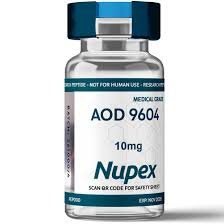
Benefits of AOD-9604
● Regulates blood sugar levels and manages insulin levels.
● Reduces inflammation
● Promotes weight loss by burning fat.
● Increases the number of calories burned.
● Boosts metabolism
● Encourages bone and cartilage health.
● Triggers fat release from fat cells.
● Increases energy levels.
● Anti-aging benefits.
● Enhances muscle recovery.
AOD9604 is a modified version of human growth hormone (hGH) fragment 176-191 and has
shown promising results in various research areas.
One of the primary benefits of AOD9604 is its potential role in fat metabolism and weight loss.
By stimulating the pituitary gland, AOD9604 aids in regulating fat metabolism and reducing
body fat. It promotes lipolysis, the breakdown of fat cells, and inhibiting the formation of
new fat cells. This can lead to enhanced weight loss and improved body composition.
In addition to its fat-burning properties, AOD9604 has also been studied for its potential effects
on other health conditions. Research suggests that it may have positive implications for heart
disease, osteoarthritis, cartilage repair, and metabolic syndrome.
This PRODUCT IS INTENDED FOR RESEARCH PURPOSES ONLY. It is designed for in vitro
testing and laboratory experimentation exclusively. All the information provided on this website
is purely for educational purposes. Under the law, any form of bodily introduction of this product
into humans or animals is strictly prohibited. It is essential that only licensed and qualified
professionals handle this product. This product is not intended to be used as a drug, food, or
cosmetic. It must not be misbranded, misused, or mislabeled as such. Its purpose and usage
are solely confined to research and scientific investigation.
Description
What is AOD9604?
AOD9604 is a synthetic peptide derived from a specific part of human growth hormone (hGH). It
has been studied for its metabolic actions, particularly in relation to fat metabolism. AOD9604
is known for its ability to target areas of the body with high fat levels and assist in weight
loss. It mimics the effects of natural growth hormones in regulating fat metabolism. This
peptide has shown promise in clinical studies for its potential therapeutic use in obesity
treatment.
In addition to its potential metabolic benefits, AOD9604 stands out for its unique ability to avoid
triggering an immune system response due to its structural similarity to human growth
hormone (HGH). Unlike other peptides, no evidence suggests the body develops antibodies
against AOD9604.
AOD9604 Structure
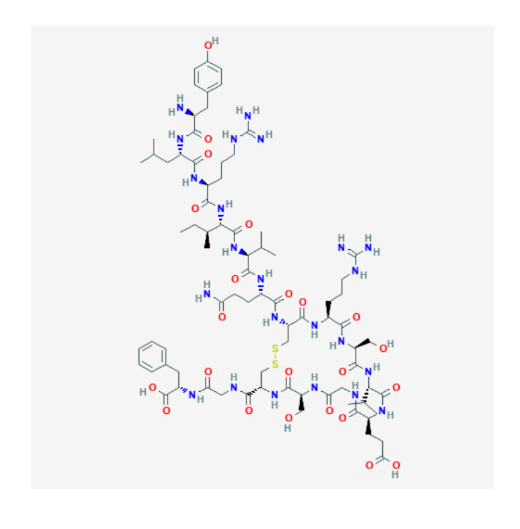
Source: PubChem
● Sequence: Tyr-Leu-Arg-Ile-Val-Gln-Cys-Arg-Ser-Val-Glu-Gly-Ser-Cys-Gly-Phe Disulfide
bridge Cys7-Cys15
● Molecular Formula: C78H123N23O23S2
● Molecular Weight: 1815.12 g/mol
● PubChem CID: 16131447
● CAS Number: 386264-39-7
AOD9604 Research
1.AOD9604 and Obesity
Studies on genetically obese mice and rats have demonstrated that AOD9604 can directly
influence fat metabolism without affecting appetite. In addition, research has shown that
AOD9604 can reduce body weight and body fat in obese animals.
Clinical trials are underway to investigate the effects of AOD9604 on human subjects. The
results from these trials will provide further insights into the efficacy and safety of this peptide as
a potential treatment for obesity.
One study titled “Safety and Tolerability of the Hexadecapeptide AOD9604 in Humans”
aimed to examine the safety and tolerability of AOD9604 in human subjects. The study involved
the enrollment of 534 participants at 16 Australian hospitals and medical centers. The findings
indicated that AOD9604 displayed a very low incidence of adverse events in relation to its
intake.
One study, titled “Safety and metabolism of AOD9604, a novel nutraceutical ingredient for
improved metabolic health,” investigated the safety and metabolic effects of AOD9604. The
research was carried out at Monash University in Clayton, Australia. The study explored the
effects of AOD9604 on blood glucose, insulin levels, and lipid metabolism. The results
suggested that AOD9604 had positive effects on metabolic health.
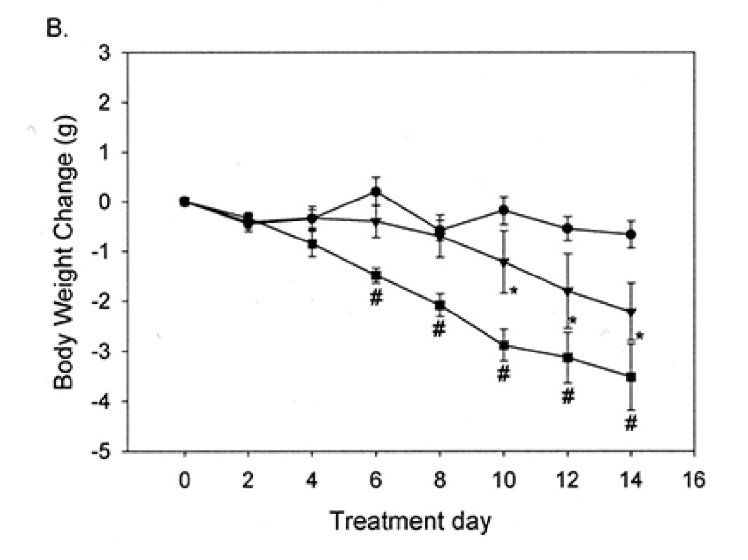
Body weight change in obese mice over 14-day treatment period with AOD9604 (squares),
HGH (triangles), and placebo (circles).
Source: Oxford Academic
2.Joint Pain and Function
Research implies that AOD9604, when administered through intra-articular injections, may
have positive effects on joint pain and function. In a recent study investigating the effects of
AOD9604 intra-articular injections, researchers examined the impact of these injections on
individuals with collagenase-induced knee osteoarthritis. Scientists notice rapid recovery
from lameness in the group that received AOD9604 and HA (hyaluronic acid) injection. This
shows that early administration of AOD9604 may provide anti-inflammatory and pain relief
benefits.
Additionally, using AOD9604 in combination with other peptides, such as BPC-157, has
shown potential for cartilage repair and regenerative properties. This suggests that
AOD9604, when paired with specific peptides, may aid in the repair and regeneration of
cartilage, further improving joint health.
3.AOD9604 and Heart Disease
Research found that AOD9604 may have potential implications for heart disease and
cardiovascular health. Heart disease is a significant health concern associated with morbidity
and mortality, particularly in relation to conditions like diabetes and cardiovascular issues.
AOD9604, a hexadecapeptide, is being studied as a potential therapy to modify cardiovascular
risks.
Obesity, which is often linked to heart disease, is a target of AOD9604’s potential efficacy.
Obesity is associated with metabolic and physiological problems such as type 2 diabetes and
cardiovascular diseases. By reducing belly fat, suppressing appetite, and aiding weight loss,
AOD9604 may indirectly contribute to reducing the risk of heart disease.
While further research is needed to fully understand the effects of AOD9604 on heart disease,
evidence suggests that this peptide may have beneficial effects on the heart and cardiovascular
health.
4.How safe is AOD9604?
When it comes to safety, available studies imply that AOD9604 is generally well-tolerated with
a low risk of side effects. Research has shown that AOD9604 injections have no known
health risks and are considered safe, especially when compared to traditional hormone-based
treatments. It has been demonstrated to have a good safety and tolerability profile, comparable
to a placebo.
While AOD9604 is generally considered safe, it’s important to note that individual responses can
vary. Some potential side effects that have been reported include upset stomach,
headaches, and injection site pain. However, these side effects are typically mild and
transient.
Article Author
The above literature was researched, edited and organized by Dr. Logan, M.D. Dr. Logan holds
a doctorate degree from Case Western Reserve University School of Medicine and a B.S. in
molecular biology.
Scientific Journal Author
Stier Heike studied biology and holds a PhD in Neurobiology (NMIReutlingen/ University of
Hohenheim) and a Master in Bioinformatics (University of Applied Sciences-TFH-Berlin). She
worked as a Post-Doc in several national and international Labs in Developmental Neurobiology
(NMI-Reutlingen, School of Medicine – University of Utah) and in Bioinformatics (Institute of
Bioinformatics – Charité, Berlin).
Dr. Heike pioneered a study on the safety and tolerability of the Hexadecapeptide AOD9604 in
Humans. In 2007, she joined A&R where she was responsible for the field of regulatory affairs of
herbal medicinal products, with a broad knowledge of the adjacent product categories medical
device and supplements. Dr. Heike Stier currently works in the field of regulatory affairs for
herbal medicinal products at analyze & realize GmbH.
Stier Heike is being referenced as one of the leading scientists involved in the research and
development of AOD9604. In no way is this doctor/scientist endorsing or advocating the
purchase, sale, or use of this product for any reason. There is no affiliation or relationship,
implied or otherwise, between Peptide Shop and this doctor. The purpose of citing the doctor is
to acknowledge, recognize, and credit the exhaustive research and development efforts
conducted by the scientists studying this peptide. Dr. Heike is listed in [8] under the referenced
citations.
Referenced Citations
- F. M. Ng, J. Sun, L. Sharma, R. Libinaka, W. J. Jiang, and R. Gianello, “Metabolic
studies of a synthetic lipolytic domain (AOD9604) of human growth hormone,” Horm.
Res., vol. 53, no. 6, pp. 274–278, 2000. - H. Stier, E. Vos, and D. Kenley, “Safety and Tolerability of the Hexadecapeptide
AOD9604 in Humans,” J. Endocrinol. Metab., vol. 3, no. 1–2, pp. 7-15–15, Apr. 2013.
[Journal of Endocrinology & Metabolism] - “Obesity drug codenamed AOD9604 highly successful in trials,” News-Medical.net,
16-Dec-2004. [Online]. Available: [Accessed: 24-May-2019]. - R. Zieba, “[Obesity: a review of currently used antiobesity drugs and new compounds in
clinical development],” Postepy Hig. Med. Doswiadczalnej Online, vol. 61, pp. 612–626,
Oct. 2007. - M. D. Jensen, “Potential role of new therapies in modifying cardiovascular risk in
overweight patients with metabolic risk factors,” Obes. Silver Spring Md, vol. 14 Suppl 3,
pp. 143S-149S, Jun. 2006. - M. Heffernan et al., “The Effects of Human GH and Its Lipolytic Fragment (AOD9604) on
Lipid Metabolism Following Chronic Treatment in Obese Mice andβ 3-AR Knock-Out
Mice,” Endocrinology, vol. 142, no. 12, pp. 5182–5189, Dec. 2001. - D. R. Kwon and G. Y. Park, “Effect of Intra-articular Injection of AOD9604 with or without
Hyaluronic Acid in Rabbit Osteoarthritis Model,” Ann. Clin. Lab. Sci., vol. 45, no. 4, pp.
426–432, Jul. 2015. - STIER, H., VOS, E., KENLEY, D.. Safety and Tolerability of the Hexadecapeptide
AOD9604 in Humans. Journal of Endocrinology and Metabolism, North America, 3,
apr. 2013.
ALL ARTICLES AND PRODUCT INFORMATION PROVIDED ON THIS WEBSITE ARE FOR
INFORMATONAL AND EDUCATIONAL PURPOSES ONLY.
The products offered on this website are furnished for in-vitro studies only. In-vitro studies (Latin:
in glass) are performed outside of the body. These products are not medicines or drugs and
have not been approved by the FDA to prevent, treat or cure any medical condition, ailment or
disease. Bodily introduction of any kind into humans or animals is strictly forbidden by law.
What Is BPC-157
Through these mechanisms of action, BPC-157 offers the following benefits:
● Promotes gut health – studies showed potential in using BPC for treating ulcers, IBD
(inflammatory bowel disease), and other GI (gastrointestinal tract) issues
● Boosts wound and tissue healing – this peptide promotes skin, muscles, ligament, and
tendon healing and repair
● Reduces inflammation – BPC inhibits and reduces inflammation
● Provides neuroprotection – it protects from nerve injuries and aids in brain and neural
injuries recovery
● Promotes joint health
● Protects cardiovascular system – BPC-157 offers cardiovascular protection and
showed promising results in recovery after serious heart injuries
● Counters drug damage – research has show this peptide protects the body from
damage caused by certain gut harming drugs
BPC(Body Protection Compound) 157 is a pentadecapeptide (meaning it’s composed of 15
amino acids), produced naturally by our body in an acidic environment of our stomach.
BPC-157 has various mechanisms of action which include nitric oxide synthesis, tissue
repair cells activation, inhibiting inflammation and growth factor synthesis stimulation.
This PRODUCT IS INTENDED FOR RESEARCH PURPOSES ONLY. It is designed for in vitro
testing and laboratory experimentation exclusively. All the information provided on this website
is purely for educational purposes. Under the law, any form of bodily introduction of this product
into humans or animals is strictly prohibited. It is essential that only licensed and qualified
professionals handle this product. This product is not intended to be used as a drug, food, or
cosmetic. It must not be misbranded, misused, or mislabeled as such. Its purpose and usage
are solely confined to research and scientific investigation.
What’s BPC-157 Also Known As?
BPC-157 is also known as:
● PL 14736
● PL-10
● Bepecin
and should not be confused with TB-500. Though both TB-500 and BPC-157 have similar
actions and enhance the recuperation of bones, joins, tendons, and ligaments, there are
distinct differences in origin and structure.
TB-500 is synthetically produced Thymosin Beta 4, on the other hand, BPC-157 is a
synthetically made peptide similar to Body Protection Compound.
What Are Its Available Forms?
BPC-157 is available in two forms – as an oral capsule and a subcutaneous injection. We are
selling 5mg of injectable BPC-157.
What Do You Need To Know?
Though there haven’t been too many human subject studies, BPC-157 is stable in human
gastric juice and it has not reported any toxicity.
It is safe and effective and present with minimal to no side effects. Some minor side effects you
might notice are mild fatigue, localized redness and head rush.
What’s BPC-157 Correct Dosage?
If we were to translate BPC-157 dosage from animal studies to humans, the most effective
dosage comes to about 0.73 micrograms per lb of bodyweight, or:
● 110 (0.11 milligrams) micrograms for a 150lb person
● 145 (0.145 milligrams) for a 200lb person or
● 180 (0.18 milligrams) micrograms for a 250lb person