
Sermorelin
Unlocking the potential of growth hormone, Sermorelin emerges as a groundbreaking
growth-hormone-releasing hormone (GHRH) analogue. Beyond its clinical role in assessing
growth hormone secretion, Sermorelin has captivated researchers with its remarkable range of
capabilities. From bolstering bone density to combating the effects of dementia, reducing
scarring, and even addressing seizure activity, this remarkable product holds promise in
revolutionizing various fields of medicine.
This PRODUCT IS INTENDED FOR RESEARCH PURPOSES ONLY. It is designed for in vitro
testing and laboratory experimentation exclusively. All the information provided on this website
is purely for educational purposes. Under the law, any form of bodily introduction of this product
into humans or animals is strictly prohibited. It is essential that only licensed and qualified
professionals handle this product. This product is not intended to be used as a drug, food, or
cosmetic. It must not be misbranded, misused, or mislabeled as such. Its purpose and usage
are solely confined to research and scientific investigation.Description
What Is Sermorelin?
Sermorelin is a synthetic peptide compound that stimulates the production of human growth
hormone (HGH) in the body. It is often used as a treatment for growth hormone deficiency in
children and adults. This peptide stimulates the pituitary gland to produce and release more
HGH, which can benefit the body.
Some potential benefits of Sermorelin therapy include increased muscle mass, improved
energy levels, enhanced sleep quality, reduced body fat, improved skin elasticity, and
enhanced immune function. It is typically administered through injections and requires a
prescription from a healthcare professional.
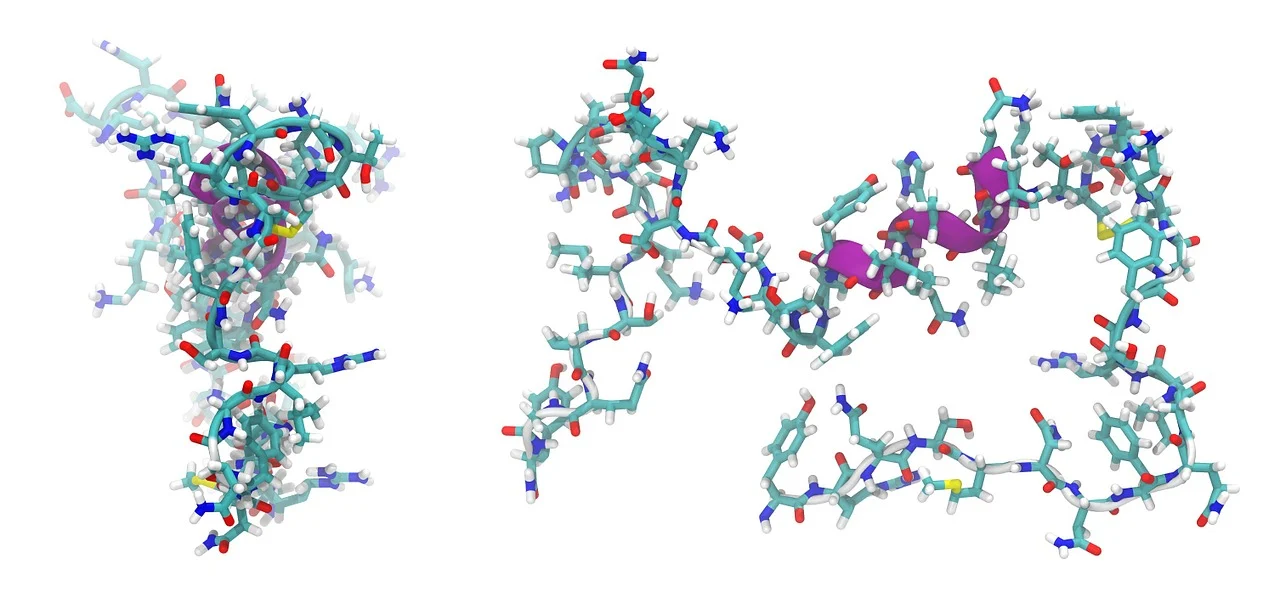
Sermorelin Peptide Structure
Sequence:
Tyr-DL-Ala-DL-Asp-DL-Ala-DL-xiIle-DL-Phe-DL-xiThr-DL-Asn-DL-Ser-DL-Tyr-DL-Arg-DL-Lys-DL
-Val-DL-Leu-Gly-DL-Gln-DL-Leu-DL-Ser-DL-Ala-DL-Arg-DL-Lys-DL-Leu-DL-Leu-DL-Gln-DL-Asp
-DL-xiIle-DL-Met-DL-Ser-DL-Arg
Molecular Formula: C149H246N44O42S
Molecular Weight: 3357.933 g/mol
PubChem CID: 16129620
Sermorelin Peptide Research
1.Sermorelin and Heart Health
Sermorelin has been the subject of research and studies exploring its potential impact on
heart health. It is a synthetic peptide compound that stimulates the production of human growth
hormone (HGH) in the body. Research suggests that Sermorelin may have therapeutic effects
on heart failure and cardiac dysfunction. By stimulating HGH production, Sermorelin may
help promote healthy muscles and bones, contributing to overall cardiovascular well-being
and potentially lowering the risk of heart disease.
Furthermore, Sermorelin therapy has been investigated for its potential role in mitigating the
impact of different types of cardiac diseases. Studies are being conducted to explore the
benefits of Sermorelin in improving heart function and cardiac outcomes.
It is important to note that Sermorelin therapy should only be used under medical supervision
and as prescribed. Potential benefits, risks, and side effects should be discussed with a
healthcare provider before initiating this therapy. In rare cases, common side effects of
Sermorelin may include chest pain, difficulty breathing, blurred vision, or swelling at the injection
site.
2.Sermorelin and Epilepsy
Sermorelin and epilepsy have been the subject of various studies. While there is ongoing
research, some findings suggest a potential relationship between Sermorelin and epilepsy
management.
A study conducted on mice with epilepsy administered growth hormone-releasing hormone
(GHRH) analogs, including Sermorelin, to assess their impact on seizure activity. The study
found that these peptides, specifically GHRH analogs, effectively suppressed seizures by
activating GABA receptors. However, it’s important to note that this is a relatively new finding,
and further research is needed to fully understand the extent of this relationship.
Additionally, another research highlights the use of GHRH analogs like Sermorelin in testing the
effect of these peptides on seizures in mice. While this research shows promise, it is crucial to
consult with a healthcare professional before considering any treatment options, including
Sermorelin, for epilepsy management.
3.Sermorelin and Sleep
Sermorelin has been associated with sleep-related benefits. Research suggests that
Sermorelin may positively impact sleep quality and patterns. It is believed to promote deeper,
more restful sleep, which can contribute to overall well-being.
One study explored the effects of growth hormone-releasing factor (GHRF) suppression on
sleep and growth hormone secretion in rats. The study found that inhibiting GHRF suppressed
both sleep and growth hormone secretion.
Furthermore, peptide therapies like Sermorelin have been suggested as sleep-promoting
interventions. Peptides such as Sermorelin and CJC1295 are known for their potential
effectiveness in promoting sleep. These therapies are believed to enhance sleep quality and
support better sleep patterns.
4.Sermorelin Preferred to Growth Hormone
For various reasons, Sermorelin is sometimes preferred over direct growth hormone (GH)
supplementation. While both Sermorelin and GH therapy can stimulate the production of human
growth hormone, there are certain advantages to using Sermorelin.
One key advantage of Sermorelin is its ability to promote the body’s natural production of
GH. It stimulates the release of GH from the pituitary gland, leading to more balanced and
physiologically regulated GH levels. This natural stimulation may help avoid the potential
negative feedback loop that can occur with exogenous GH administration.
Another benefit of Sermorelin therapy is its cost-effectiveness. Sermorelin is generally more
affordable compared to direct GH therapy, making it a more accessible option for individuals
seeking growth hormone-related benefits.
Additionally, Sermorelin therapy has been associated with fewer side effects compared to
direct GH administration. It has a lower risk of causing adverse events such as joint pain, fluid
retention, and glucose intolerance.
Article Author
The above literature was researched, edited and organized by Dr. Logan, M.D. Dr. Logan holds
a doctorate degree from Case Western Reserve University School of Medicine and a B.S. in
molecular biology.
Scientific Journal Author
Richard F. Walker, Ph.D, R.Ph, lead author of A better approach to management of adult-onset
growth hormone insufficiency?”, received a BS in pharmacy from Rutgers University, a MS in
Biochemistry from New Mexico State University and a PhD in a physiology from Rutgers
University. He holds postdoctoral fellowships in neuroendocrinology and neuropharmacology at
Duke University College of Medicine (Center for the Study of Aging and Human Development)
and the University of California, Berkeley, respectively.
Richard F. Walker, Ph.D, R.Ph is being referenced as one of the leading scientists involved in
the research and development of Sermorelin. In no way is this doctor/scientist endorsing or
advocating the purchase, sale, or use of this product for any reason. There is no affiliation or
relationship, implied or otherwise, between Peptide Shop and this doctor. The purpose of citing
the doctor is to acknowledge, recognize, and credit the exhaustive research and development
efforts conducted by the scientists studying this peptide. Richard F. Walker, Ph.D, R.Ph is listed
in [5] under the referenced citations.
Referenced Citations
- L. L. Bagno et al., “Growth Hormone–Releasing Hormone Agonists Reduce Myocardial
Infarct Scar in Swine With Subacute Ischemic Cardiomyopathy,” J. Am. Heart Assoc.
Cardiovasc. Cerebrovasc. Dis., vol. 4, no. 4, Mar. 2015. - R. M. Kanashiro-Takeuchi et al., “New therapeutic approach to heart failure due to
myocardial infarction based on targeting growth hormone-releasing hormone receptor,”
Oncotarget, vol. 6, no. 12, pp. 9728–9739, Mar. 2015. - S. Tang et al., “Interactions between GHRH and GABAARs in the brains of patients with
epilepsy and in animal models of epilepsy,” Sci. Rep., vol. 7, Dec. 2017. - B. S. Shepherd et al., “Endocrine and orexigenic actions of growth hormone
secretagogues in rainbow trout (Oncorhynchus mykiss),” Comp. Biochem. Physiol. A.
Mol. Integr. Physiol., vol. 146, no. 3, pp. 390–399, Mar. 2007. - R. F. Walker, “Sermorelin: A better approach to management of adult-onset growth
hormone insufficiency?,” Clin. Interv. Aging, vol. 1, no. 4, pp. 307–308, Dec. 2006. - S. T. Wahid, P. Marbach, B. Stolz, M. Miller, R. A. James, and S. G. Ball, “Partial
tachyphylaxis to somatostatin (SST) analogues in a patient with acromegaly: the role of
SST receptor desensitisation and circulating antibodies to SST analogues,” Eur. J.
Endocrinol., vol. 146, no. 3, pp. 295–302, Mar. 2002.
ALL ARTICLES AND PRODUCT INFORMATION PROVIDED ON THIS WEBSITE ARE FOR
INFORMATONAL AND EDUCATIONAL PURPOSES ONLY.
The products offered on this website are furnished for in-vitro studies only. In-vitro studies (Latin:
in glass) are performed outside of the body. These products are not medicines or drugs and
have not been approved by the FDA to prevent, treat or cure any medical condition, ailment or
disease. Bodily introduction of any kind into humans or animals is strictly forbidden by law.
Source:
https://pubmed.ncbi.nlm.nih.gov/25797248/
https://www.nature.com/articles/s41598-017-18416-5
https://pubmed.ncbi.nlm.nih.gov/1747749/
https://www.healthline.com/health/sermorelin#who-shouldnt-get-sermorelin
https://pubmed.ncbi.nlm.nih.gov/25678185/